Thursday, November 14, 2013

50 Years Ago Today


U.S. President John F. Kennedy, at the border of Delaware and Maryland, in a ribbon cutting ceremony with some 10,000 people in attendance the I-95 on November 14, 1963

JFK Ribbon Cutting Opening the I-95 Interstate Freeway
http://wwwtripwithinthebeltway.blogspot.com/2010/11/47-years-ago-today.html


A basic logic scenario- something that JFK adopted about a year before 11-22-63 and deliberately botched- see the 1963 Boston Inner Belt study which shows various partially open tunnel box for the Fenway segment- I think it' likely that he noticed that great view southbound from the CUA side of the RR- clearly some entity with too much political power subverts transport planning.
1963 Boston Inner Belt Fenway segment

Washington, D.C. Freeway Planning  Hegelian Dialectic
http://wwwtripwithinthebeltway.blogspot.com/2010/05/1960s-washington-dc-freeway-planning.html

JFK MURDERED to Keep I-95 far away from Catholic University of America?
http://wwwtripwithinthebeltway.blogspot.com/2012/01/crafted-controversy-scuttling-of-jfks-b.html

See the 1963 engineering report on the Boston 'Inner Belt' Fenway segment to see example of box tunnel - alas partially open - indicating far more advanced highway design ...

JFK at A Trip Within The Beltway
http://wwwtripwithinthebeltway.blogspot.com/search?q=JFK


Wednesday, November 13, 2013

Ron Kirby MURDERED


Kirby, 69, was the executive director of the Washington Metro Council of Governments Transportation Planning Board.

Was found dead with multiple gun shot wounds, in his house on Elm Street, in Alexandria, Virginia.

Might this be the result of Kirby recently speaking directly about, or alluding to the need for the Washington D.C. area for addressing the UNjustified gaps in the local-urban freeway grid?  I did have the honor of being able to talk to him personally about the logical freeway project of the inside the Capital Beltway I-95 via the PEPCO-New Hampshire Avenue-B&O Route - which was deliberately scuttled - to which he told me did make sense but had been so opposed by so many leading to its cancellation by Maryland in July 1973.

Note- I myself used to be involved with COG's TPB's Citizen's Advisory Board (CAB) during the latter 1990s, where I was able to speak in favor of more comprehensive transportation planning - aka urban freeways and rail.  That is until they made it into a closed event, meaning that the members were now appointed- hence closing the door to participation by the general public, in favor of stacking it with anti highway ideologues- as if meant to sustain a dogmatic-doctrinaire that they KNEW they could not otherwise sustain.
http://www.washingtonpost.com/local/crime/dc-council-of-governments-official-slain-in-home/2013/11/12/c08d1590-4bb8-11e3-be6b-d3d28122e6d4_story_1.html

A man who helped shape the region’s transportation policy for a quarter-century was fatally shot inside his Alexandria home Monday in a stunning incident that has police — and his many friends in politics and the media — searching for an explanation.

Officials said Tuesday that Ronald Kirby, 69, director of transportation planning at the Metropolitan Washington Council of Governments, died of multiple gunshot wounds to the torso and that the medical examiner had deemed the case a homicide.

Alexandria Police Chief Earl L. Cook said the slaying should not be taken as “cause for tremendous alarm” among residents of Kirby’s neighborhood, but he would not say whether Kirby might have been specifically targeted.

“We don’t know that at this point,” Cook said. “It’s too early to eliminate any possibility.”
News of Kirby’s death sent shock waves through political and media circles, in which Kirby was known as a personable policy wonk who could translate impenetrable transportation jargon into plain English — with a trademark Aussie accent.

“He was really a brilliant man,” said Lon Anderson of AAA Mid-Atlantic. “He brought a very informed voice of reason to some very contentious regional transportation debates. He was just a prince of a guy.”

Kirby had worked for the Council of Governments for more than 25 years and was director of transportation planning for COG’s National Capital Region Transportation Planning Board. He was often quoted in news reports, and he was known among transportation experts and public officials as someone who could bring a regional viewpoint to transportation debates.

A Telling Indifference
http://wwwtripwithinthebeltway.blogspot.com/2010/05/telling-indifference.html


Saturday, September 14, 2013

COUNTER REFORMATION- An Introduction

Prerequisite Readings:

Who Really Stopped DC Freeways
http://wwwtripwithinthebeltway.blogspot.com/2008/12/who-really-stopped-washington-dcs.html

Washington D.C. Supreme Bridge NON Builder
http://wwwtripwithinthebeltway.blogspot.com/2010/09/washington-dcs-supreme-bridge-builder.html

The Hidden Power Hidden In Plain Sight
http://continuingcounterreformation.blogspot.com/2011/07/up-front-hidden-in-plain-sight.html

In The Shadow of CUA
http://wwwtripwithinthebeltway.blogspot.com/2009/10/ectcs-creation-assisted-by-roman.html

Counter Reformation
http://encyclopedia2.thefreedictionary.com/Counter-Reformation

Counter-Reformation

Catholic reaction, an ecclesiastical and political movement in Europe in the mid-16th to 17th century that was led by the papacy and that was directed against the Reformation, with the aim of restoring the position lost by Catholicism in several countries during the first half of the 16th century. In essence the Counter-Reformation was one of the manifestations of feudal reaction (embracing not only the economic and political spheres but the ideological as well), the religious form of the “counterattack” of feudal forces attempting to strengthen the feudal system at a time when it had already begun to disintegrate.

The Inquisition, monastic orders, and the Roman curia were the chief instruments of the Counter-Reformation. The Inquisition, reorganized in 1542 into one of the congregations of the Roman curia and placed under the direct authority of the pope, unleashed in the Catholic countries a struggle against progressive ideas, freethinking, science, and all manifestations of Reformation thought (popular movements in the Reformation were persecuted with particular force). G. Bruno and G. Vanini were burned at the stake, and T. Campanella, Galileo, and many other progressive thinkers were subjected to persecution.

The Jesuit Order, created in 1534—40, took the most active part in the Counter-Reformation. With the help of the Jesuits and other forces of Catholic reaction the papacy succeeded at the Council of Trent (1545–63) in obtaining, in particular, recognition of the unconditional authority of the pope in matters of faith, introduction of a strict ecclesiastical censorship, publication of the Index of Forbidden Books, and other measures. The resolutions of the council became something of a program for the Counter-Reformation. The Trent Profession of Faith was adopted, which all ecclesiastics had to sign; any deviation from it
was considered heresy and was persecuted.

During the Counter-Reformation there were created in Rome a number of educational establishments for the special training of Catholic clergymen, who were sent, above all, to the countries that were the arena for the most intense struggle between the forces of the Reformation and Counter-Reformation (such as Germany, the Netherlands). During the Counter-Reformation the Jesuits seized control of many universities, which in turn became instruments of Catholic reaction. Among the church figures who most zealously waged the Counter-Reformation were Popes Paul III, Paul IV (Cardinal Carafa prior to his election as pope), and Pius IV, as well as Cardinal Carlo Borromeo and the Jesuit P. Canisius.

The Counter-Reformation was not only the work of institutions of the Catholic Church. It was also energetically waged by the secular powers of several countries, including the Hapsburgs in Spain and the so-called Holy Roman Empire, Maximillian of Bavaria, and Sigismund III Vasa in Poland. Supporters of the Reformation were subjected to state persecution; special government edicts were issued that demanded the return of Protestants to the “bosom of the Catholic Church” under the threat of high fines, expulsion from the country, or even execution. One of the manifestations of the Counter-Reformation was the struggle for the return of lands lost by Catholics during the carrying out of the Reformation (publication of the Edict of Restitution of 1629 by Ferdinand II, emperor of the Holy Roman Empire). Under the banner of the Counter-Reformation, Spain waged its struggle against the Dutch bourgeois revolution of the 16th century, and the Hapsburgs suppressed the liberation movement of their subjugated peoples and struggled for the realization of the idea of the creation of a “universal Christian empire” (as during the Thirty Years' War of 1618–48).

Having brought together the forces of feudal reaction, the Counter-Reformation to a certain extent strengthened the position of the papacy and the Catholic Church (having restored Catholicism and suppressed Reformation movements in several countries) and temporarily retarded the onset of the forces of the new, bourgeois society.

REFERENCES
Mikhnevich, D. E. Ocherki po istorii katolicheskoi reaktsii (lezuity). Moscow, 1953.
Lozinskii, S. G. Istoriia papstva. Moscow, 1961.
Brandi, K. Deutsche Reformation und Gegenreformation. Vol. 2:
”Gegenreformation und Religionskriege.” Leipzig, 1930.
The Great Soviet Encyclopedia, 3rd Edition (1970-1979). © 2010 The Gale Group, Inc. All rights reserved.

Wednesday, August 14, 2013

Washington, D.C. War on People Shuns East of Anacostia - Massachusetts Avenue SE Bridge

Massachusetts Avenue SE Bridge - Not all of Washington D.C.'s unjust truncations are freeways

If built would make Massachusetts Avenue Washington, D.C.'s longest continuous boulevard. 

Richard Laymen to his credit has supported this bridge.

Organizations as the "Capitol Hill Restoration Society" have to their detriment opposed it.

The lack of a bridge to carry and connect Massachusetts Avenue across the Anacostia River isolates the area east of the Anacostia River, and represents a Capitol Hill snobbery that has no place in our nation's Capital.

Tuesday, July 23, 2013

Eastern Star 2013 Waste

They Were Warned.

http://wwwtripwithinthebeltway.blogspot.com/2013/01/constitutional-power-can-free-us.html 

 http://wwwtripwithinthebeltway.blogspot.com/2011/07/eastern-star-dc-i-95-chock.html


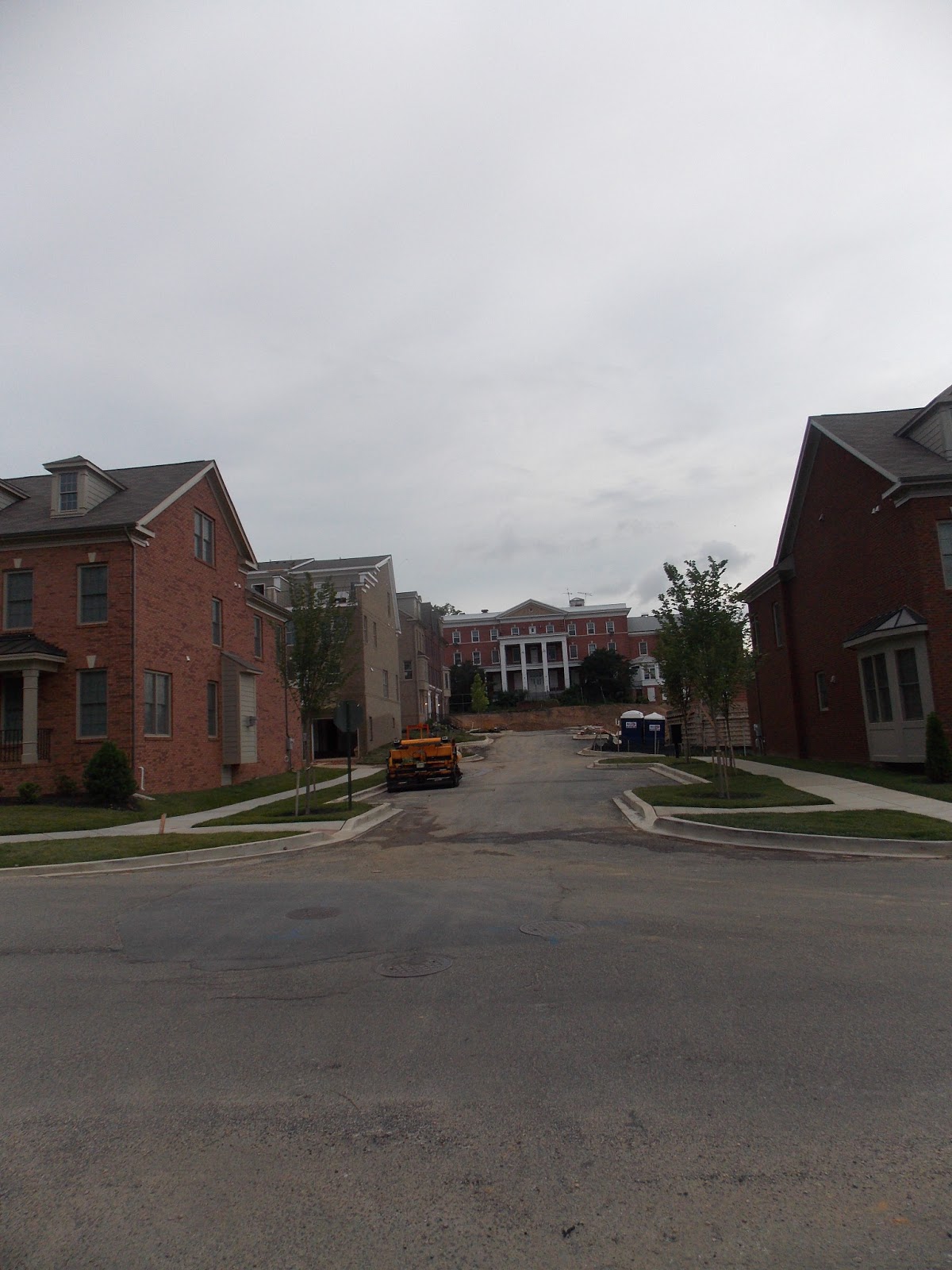
Desecration of the Eastern Star property at 6000 New Hampshire Avenue NE


Demolition Specials in the path of Washington, D.C. PEPCO-B&O I-95


This is a classic example of why eminent domain is entirely proper as a basic concept and is within the U.S. Constitution.

No one buying into this boondoggle should claim that they were not warned.